










Frozen Food Boxes UK: Packaging That Works in Cold Supply Chains


When groceries are chilled or frozen, packaging plays a role that’s far more technical than simply holding a product. Frozen food boxes have to navigate extreme temperatures, moisture changes, freezer burn prevention, thermal shock and retail presentation, all while acting as a vehicle for brand story and product information.
Unlike dry goods or ambient foods, packaging for frozen goods sits at the intersection of food science and logistics. It’s not just about protection; it’s about performance across environments that change from warehouse to truck to freezer cabinet and finally into the consumer’s home.
Cold Realities: What Makes Frozen Food Packaging Unique
Frozen foods face a range of challenges that don’t affect many other categories:
- Temperature Fluctuations
Rapid changes from cold storage to ambient display areas, then back to freezing temperatures at home. - Condensation and Ice Build-Up
Moisture from humid air can frost over packaging, and that affects carton integrity over time. - Freezer Burn Prevention
Ice crystals forming on surface can diminish product quality; packaging must limit air exposure. - Structural Stress
Low temperatures make some materials brittle, so the structural design must tolerate thermal shock. - Retail Performance
Boxes should stand upright in freezer cabinets and attract attention under cold lighting.
Materials That Perform When It Gets Cold
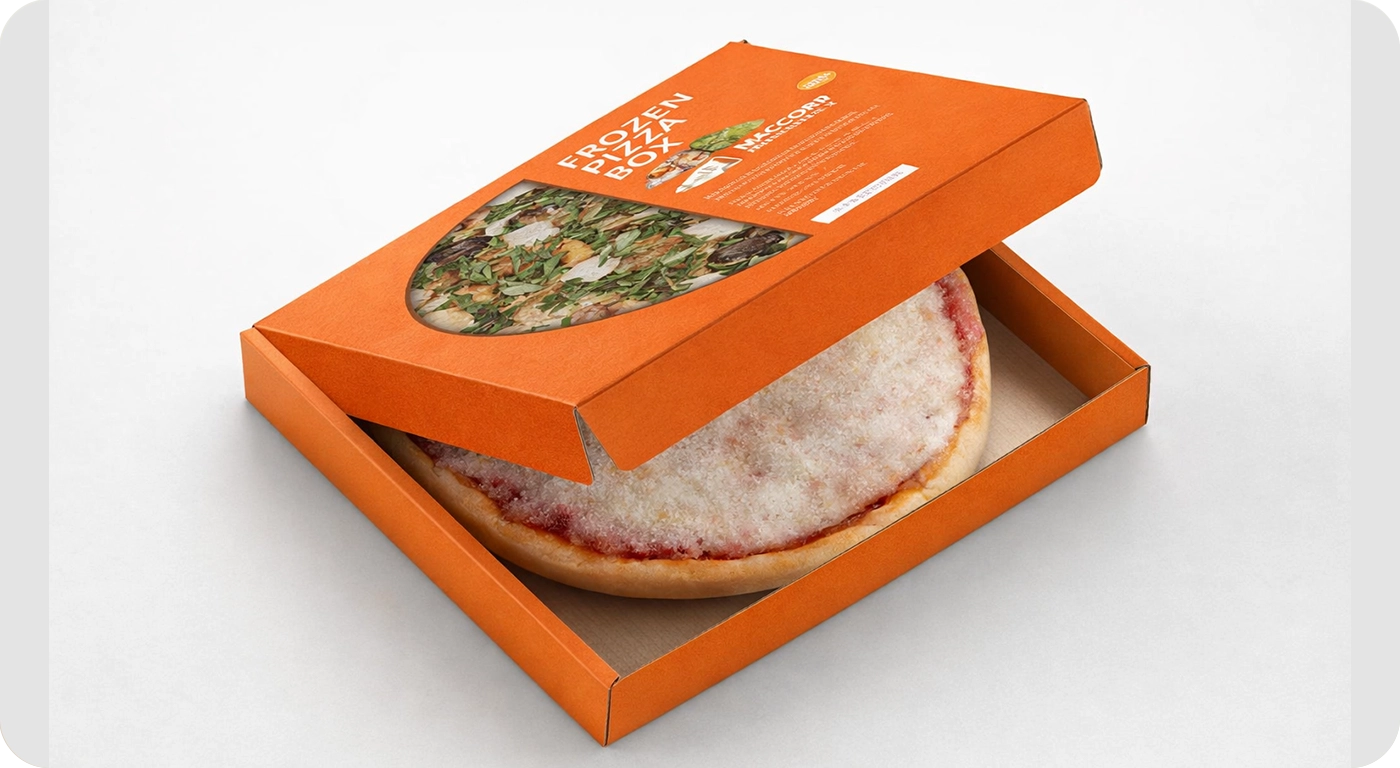
Selecting the right materials for frozen food boxes is a necessary decision. In cases of frozen food packaging, standard paperboard isn’t enough. Frozen food boxes require cold-strength paperboard which is layered to resist moisture and retain structural integrity even when damp. Brands apply thin wax or poly coatings to keep the board from freezing condensation or prevent water or grease from softening it. Corrugated boxes also provide necessary stiffness and protection behind freezer doors usually for larger or heavier items.
You can avoid packaging that weakness, warps, or collapses during story by understand how the material behaves under freezing conditions.
Designing Frozen Food Boxes for Every Stage of the Journey
Frozen food boxes need to perform throughout the entire path from factory to consumer doorstep:
Production and Filling
Boxes must be compatible with high-speed packaging lines and not deform under rapid handling.
Cold Storage and Distribution
Stackability matters. Boxes hold up better when they’re precisely engineered to prevent leaning or crushing when piled in cold rooms or on pallets.
Freezer Cabinets
Retailers need packaging that presents well under LED cold lighting and performs reliably when customers browse cold cases.
Home Storage
Boxes should be easy to open yet sturdy enough to resist tearing when chilled. Clear instructions for freezing or heating also help improve meal preparation.
Design isn’t just about the shape; it’s about performance across multiple environments that most foods never encounter.
Information Layout That Makes Sense on Shelf
In busy freezer aisles, shoppers often make decisions quickly, with limited time to read. Frozen food boxes that communicate concisely and clearly tend to stand out, such as:
- Strong Product Names with Clear Benefits
Crispy Battered Fish Fillets, Smoky BBQ Jackfruit Bites - Simple Nutrition Highlights
Calories per serve, protein or fibre call-outs - Cooking Instructions Front and Back
Clear steps for oven, air fryer or microwave - Brand Story or Ethical Position
Free-range, sustainable sourcing, no artificial colours
Retailers and consumers alike respond to clarity, not overcrowded text. The right use of space lets shoppers understand what they’re buying without squinting through frosty glass doors.
A Fresh Take on Sustainability for Frozen Food Boxes
Sustainability discussions in frozen packaging often circle recycling, but there’s another dimension worth exploring: resource efficiency over the packaging life cycle.
Design for Reduced Material Use
Instead of relying on thick coatings, smarter structural engineering can reduce the need for heavy lamination while retaining performance at low temperatures. Less material isn’t just lighter, it often streams more cleanly through recycling systems.
Modular Packaging
Some brands design a standard box template that fits multiple product SKUs, reducing waste in pre-press and tooling. This also reduces SKU complexity for retailers.
Transparent Recycling Cues
Rather than generic recycling icons, printing specific guidance such as “Box can go in household paper recycling; separate liner” supports better consumer behaviour.
Beyond the Box
Brands are exploring returnable packaging programs for wholesale supply that shift the discussion from single-use discard to circular resource planning.
The sustainability story for frozen food boxes isn’t just about what happens after use, it’s about designing packaging that fits everyday use and waste streams that consumers actually understand.
Practical Considerations Before You Order Frozen Food Boxes
If you’re planning custom frozen food packaging for your product range, here are some technical considerations that matter in real operations:
Temperature Tolerance Testing
Prototyping boxes in real cold conditions reveals how materials behave when frozen and thawed repeatedly.
Stack Load Ratings
Boxes that fail under load in cold storage can create messy, costly situations for retailers and warehouses.
Clear Opening Mechanisms
Perforations and resealable flaps should work even when cartons are chilled.
Consistency Across SKUs
Using a common base design for multiple products helps retailers manage space and simplifies ordering cycles.
Forward planning in these areas avoids late-stage surprises and costly design changes.
Frozen Food Boxes That Do Their Job
Frozen food packaging isn’t glamorous, but it’s essential. When designed thoughtfully, boxes protect product quality, support retail operations and help brands communicate clearly in a crowded market.
They respond to physical demands (moisture, cold, stacking), operational realities (cold storage, delivery), and consumer behaviour (quick decisions in freezer aisles).
Frozen food boxes may be humble in appearance, but they hold up products that people rely on for convenience and everyday meals. For manufacturers and retailers in the UK that are serious about performance and consumer satisfaction, understanding how packaging behaves in context means fewer surprises and better experiences at every stage of the frozen food journey.


