










Custom Biscuit Boxes: Materials, Designs and Practical Packaging Ideas


Biscuits are Britain’s favourite, and a great biscuit isn’t just judged by flavour; it’s judged by texture, crunch, and how well it survives the journey from kitchen to a cup of tea. Yet, packaging is often the unsung hero in this story.
The right biscuit box holds the product well, agreed. But before a single bite is taken, the box protects delicate layers, manages moisture, prevents breakages, and reflects the brand’s personality. From artisanal shortbread makers to large-scale confectionery brands, British bakers put a lot of thought into the packaging to make sure it meets multiple, sometimes competing, requirements. A well-designed biscuit box bridges the gap between functionality and brand experience.
The Practical Challenge of Packaging Biscuits
Unlike other food items, biscuits are extremely fragile items. A slight bump and it’s all brought down to crumbs. Moisture, even from condensation, softens crisp edges. While all other food items face these challenges, they become magnified when the product is fragile or delicate.
A well-engineered biscuit box prevents breakage without using any excessive void fill, resist moisture and maintain crunch, be easy to open without crushing the contents, and stack and store efficiently for retailers and customers alike These practical elements of custom packaging are foundational and worth rigorous attention.
Material Matters: Strength Meets Sensory Protection
Choosing the right material for biscuit boxes in the UK is more than a cost decision; it’s about performance.
- Corrugated board is ideal for online sales or wholesale distribution, as it absorbs shocks and protects biscuits in transit.
- Paperboard and cardboard are common materials used for retail display, as they are strong, printable, and easy to fold into custom shapes.
- Sustainable Kraft boards are chosen by artisanal and eco-conscious brands for their rustic aesthetic and easy recycling.
Shape and Structure That Respects the Biscuit
When designing packaging, brands often face a structural challenge. Biscuits are flat items, yet very fragile make them prone to crushing, twisting, or slipping if the exterior packaging fails.
That’s why custom biscuit box design often includes:
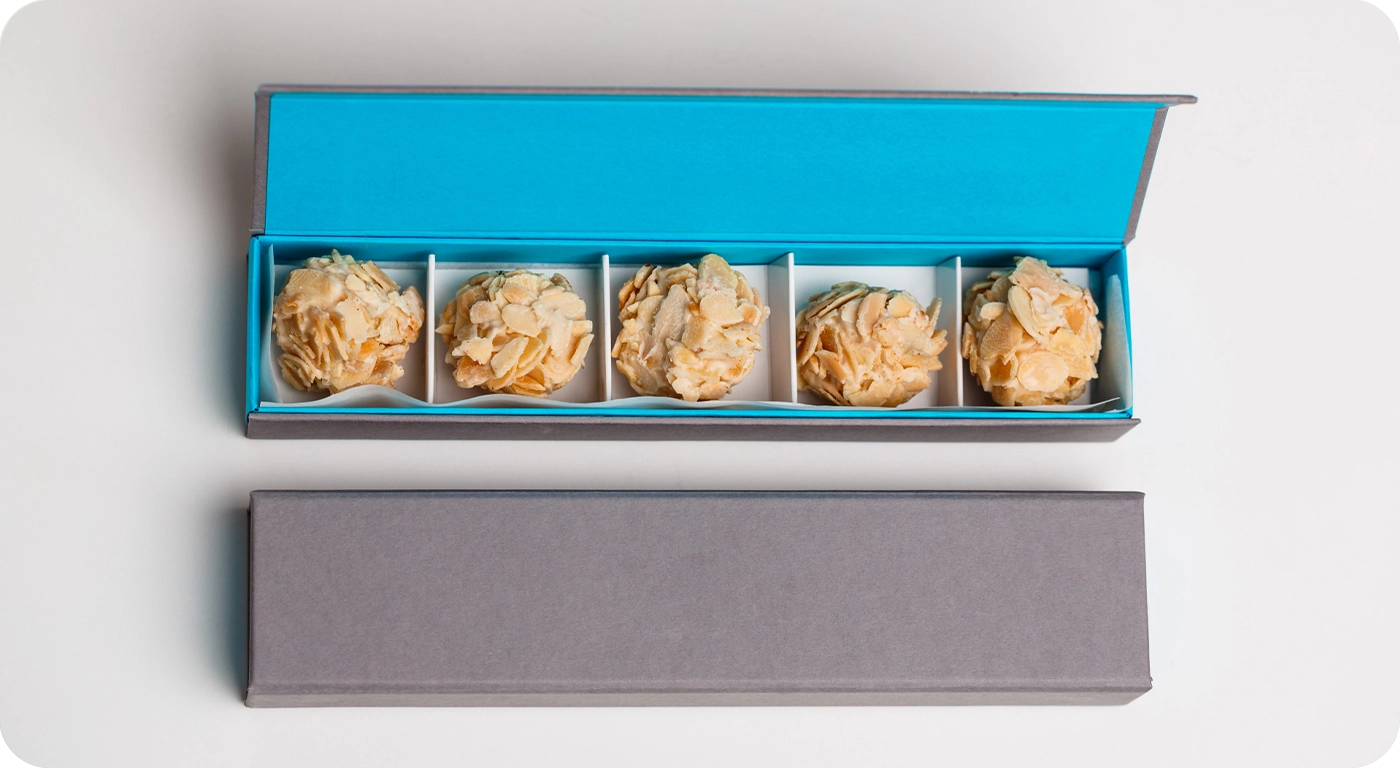
- Internal partitions or trays to prevent movement
- Multi-layered boxes for tiered assortments
- Clamshell boxes for easy access and protection
- Sleeve and tray combinations for premium presentation
A good structural design keeps the biscuit exactly where it’s supposed to be, not rattling around. This thoughtful engineering also simplifies storage on shelves and in cupboards, where neatness matters to both retailers and customers.
Customisation That Speaks Flavour Before a Bite
Notice how biscuits are marketed in the UK? From traditional shortbread, decadent chocolate-dipped fingers, to limited-edition seasonal flavours, visual cues must be considered in packaging design.
Branding choices that elevate biscuit boxes include:
- Distinctive colour palettes that align with flavour profiles
- Minimalist typography for premium, artisanal products
- Seasonal graphics for festive or limited-edition biscuits
- Window panels that tease texture and ingredients
- Interior printing with brand stories or serving suggestions
Let’s take a rich chocolate selection, for example, it would lean into deep browns and gold foiling, while a lemon drizzle range might use bright yellows and playful, sunny patterns. These design choices communicate value before the box is opened.
The Unboxing Experience: Small Details, Big Impressions
In the age of social media, even biscuit packaging gets cameras pointed at it. Like any other item, a biscuit box that’s easy to open, visually striking and structurally satisfying invites sharing.
Consider packaging that includes:
- A ribbon pull to open without bending the box
- Compartments that reveal biscuits like a curated set
- Inner lids printed with brand stories or tasting notes
- Consistent branding across outer and inner surfaces
These small touches turn an ordinary moment into something worth talking about.
Retail Realities in the UK Market
Biscuit boxes are found in every supermarket, deli and high-street shop, yet all display them differently. A box that works well stacked on a shelf may not perform as well in a vibrant artisanal market stall and vice versa.
Retail packaging needs:
- Visual impact at multiple distances
- Easy shelf placement
- Efficient storage (uniform sizes help retailers plan space)
- Clear labelling for ingredients and dietary information
In competitive retail environments, clarity and personality in packaging help biscuits perform as well as they taste.
Matching Packaging to Business Needs
Smaller artisan bakers and large manufacturers approach biscuit packaging differently. While artisan brands prioritise unboxing aesthetics, personalised designs and seasonal runs that reflect limited editions, larger producers prioritise cost and material efficiency, high-speed production compatibility, and uniform sizes for automated packing systems.
Custom biscuit boxes can be tailored to both ends of this spectrum, balancing visual identity and practical constraints. In a market as competitive as biscuits, where taste is only half the decision, packaging becomes a differentiator, not an afterthought.


